SYNAPSIS (W)ECDIS NX prepares ships for next-generation maritime data – turning new information into safer, smarter decisions.
Tuesday - 18 August 2026
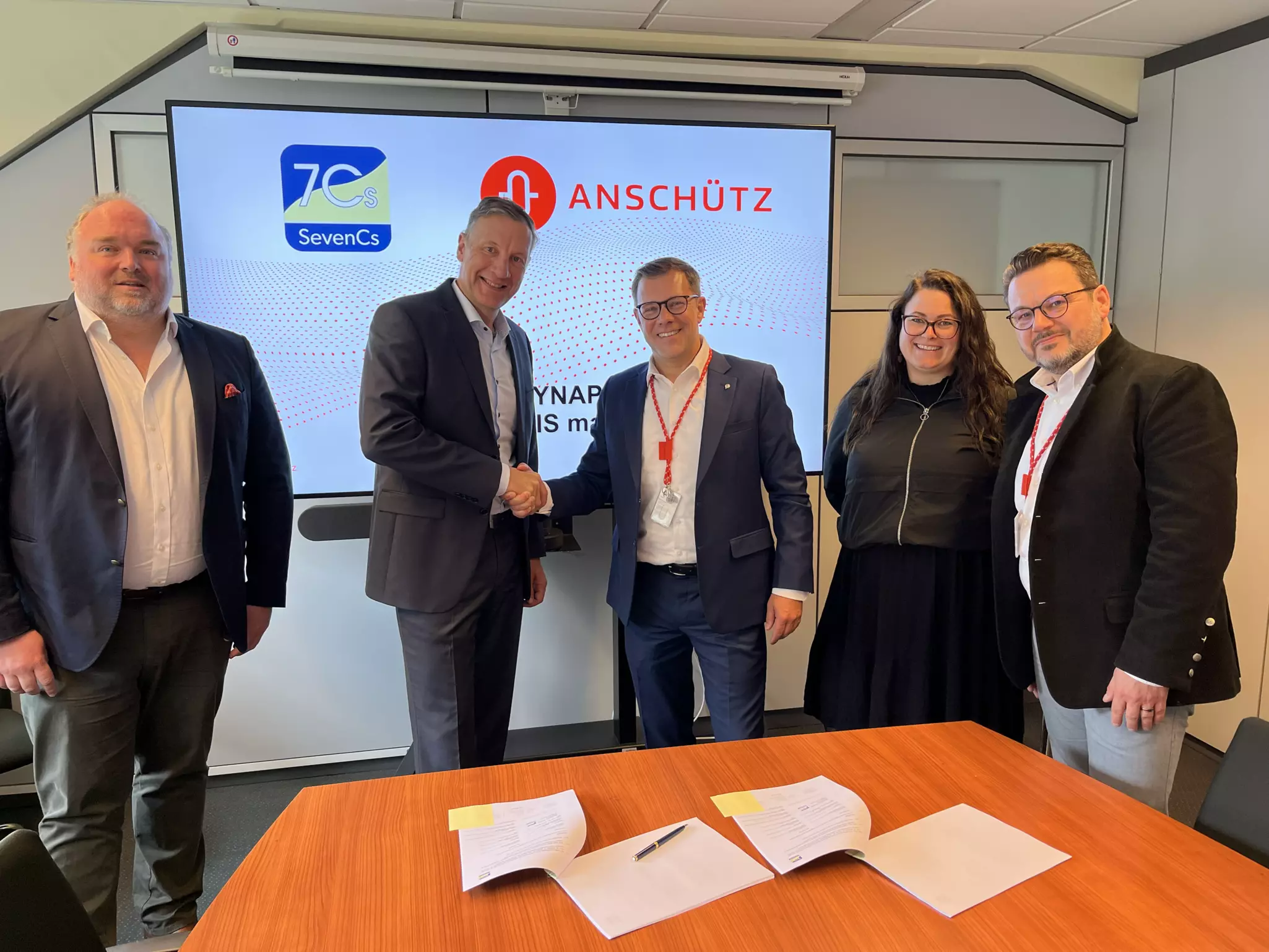
The maritime industry is entering a new phase of digital navigation. With the introduction of the IHO S‑100 standard, ship navigation is evolving from a chart-based approach towards a dynamic, data-driven environment. To actively shape this transition, Anschütz has partnered with Teledyne SevenCs, combining deep expertise in integrated navigation systems with decades of experience in hydrographic data processing and chart technology.
With the transition to S‑100, maritime navigation is entering a new phase, driven by richer and more dynamic data on the bridge. Anschütz and Teledyne SevenCs – two German maritime technology specialists – continue their longstanding cooperating to leverage these capabilities and deliver next-generation navigation solutions made in Germany.
Turning S‑100 data into a reliable operational picture requires the combination of structured data processing and system integration, bringing together the complementary strengths of Anschütz and Teledyne SevenCs. Within SYNAPSIS (W)ECDIS NX, Anschütz integrates the hydrographic software capabilities of Teledyne SevenCs into a coherent system environment, enabling precise and clearly presented information for navigators.
“SYNAPSIS ECDIS and WECDIS are designed to support the transition to the IHO S‑100 standard,” said Matthias Grote, Product Manager for SYNAPSIS software at Anschütz. “S‑100 brings a significant increase in available data. The important question is how this data is handled within the navigation system and how it supports the navigator in the respective situation. SYNAPSIS is design to combine multiple data inputs into a clear, consistent and operationally usable picture that really supports navigation.”
Stephan Dimke, General Manager, Teledyne SevenCs GmbH comments; “The transition to S-100 is one of the most significant developments in maritime navigation in decades. We are proud that Teledyne SevenCs technology will support Anschütz in this transformation. This partnership demonstrates the strength of German maritime innovation and highlights how collaboration between leading companies can help shape the future of digital navigation.”
Today’s ECDIS has established itself as a comprehensive toolbox on the bridge, combining chart data and integrated sensor inputs into navigation functions.
While these capabilities are well proven, they remain largely based on static information. In practice, navigators must interpret and mentally combine multiple data sources to build a reliable picture of the situation.
S‑100 significantly extends this foundation by introducing a broader range of dynamic and heterogeneous data sources, including high-resolution bathymetry, dynamic water levels and surface currents. These new data capabilities can support bridge teams in narrow and challenging waters and open up additional functionality and operational use cases for navigation on the bridge. In this context, the key challenge is no longer access to data, but how this information is combined and used within the navigation system.
The key challenge is to ensure that additional data does not increase complexity on the bridge but instead improves clarity and supports decision-making.
With SYNAPSIS, Anschütz addresses this by integrating S‑100 data with sensor inputs and vessel-specific parameters into a consistent operational context. This provides a clear and structured presentation of information, allowing navigators to use S‑100 data directly in their practical navigation context.
Depth information is evaluated in relation to draft and safety settings, water level updates are reflected in safety-relevant calculations, and currents are considered in route assessment and manoeuvring. With S-100, data from different sources are combined in a structured manner to support situational awareness and to reduce the need for manual interpretation.
The Teledyne SevenCs Nautilus Kernel provides the structured processing of hydrographic data as the technical basis for S-100 data handling. Anschütz integrates these data into a consistent operational context within SYNAPSIS.
Anschütz is following a clear development roadmap aligned with the regulatory S‑100 timeline ensuring that SYNAPSIS (W)ECDIS NX meets the mandatory requirements for new installations while continuing to evolve in line with operational needs.
For more information, visit www.sevencs.com or contact [email protected].